




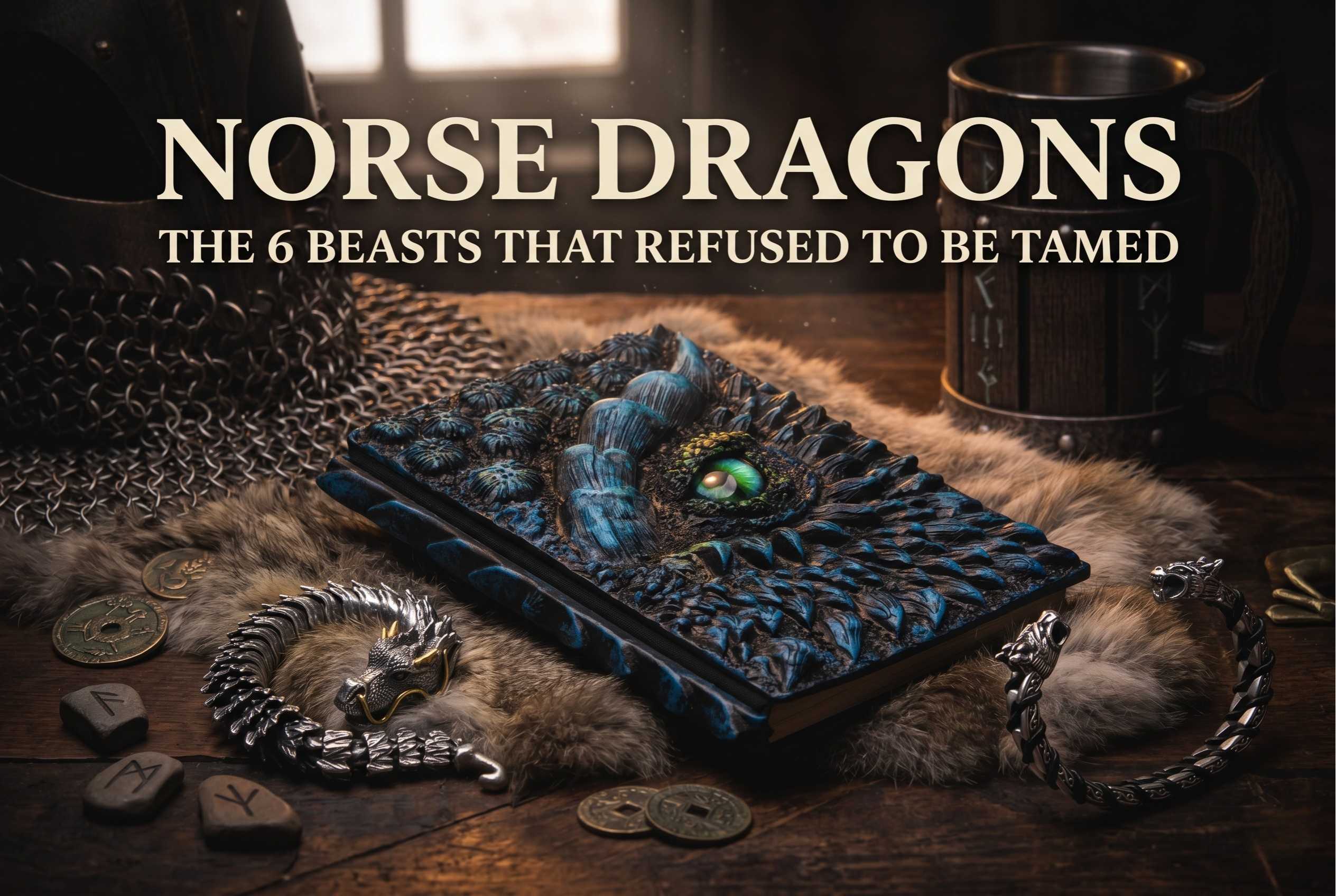

Norse Dragons
The 6 Beasts That Refused to Be Tamed
The complete guide to dragons in Norse mythology, the serpents that built worlds, devoured roots, and made gods afraid. Their legends, their meaning, and the jewelry pieces that carry their fire into your life today.
The world has too many people willing to be small. The dragon was never one of them. Coiled around the earth, gnawing at the world tree, hoarding gold beneath mountains, the dragon refused to apologize for taking up space. You're not reading this by accident.
Why You're Really Here
🌋 You probably feel one of these:
- You've spent years shrinking yourself to fit into spaces, jobs, conversations, expectations, that were never built for who you actually are.
- You're tired of jewelry that whispers. You want something that announces itself before you even speak, the way a dragon's shadow does.
- You've felt the fire inside you get smaller every year. Not because it's gone, but because the world keeps telling you to keep it down. You're done with that.
- You want a piece that's not for everyone. Something the average man would never wear. Something that filters out the wrong people from the start.
- You're at a chapter where you need to guard what's yours, your work, your time, your peace, your people, with the kind of unapologetic ferocity the Vikings carved onto their ships.
🔥 That's exactly what the dragon is for
For over a thousand years, Norse warriors carved dragons onto their ships, weapons, doorways, and bodies. Not because dragons were fashionable. Because the dragon was the symbol of refusal, refusal to be tamed, refusal to be small, refusal to apologize for power that the world calls dangerous.
The dragon does not exist to fit in. The dragon exists to be feared, respected, and remembered. When you wear one of these pieces, you're not buying jewelry. You're choosing a side: the side of those who refuse to disappear into the average. Six dragons. Six different ways to refuse. One of them is yours.
Dragons in Norse Mythology, A Quick Foundation
Before we meet the six, understand this: Norse dragons were not dragons in the Western fairytale sense. They were not princesses' enemies. They were not the bad guys in a tidy story. The Vikings called them dreki (dragon) and ormr (serpent), and to them, dragons were forces of nature, neither evil nor good, but impossibly powerful, impossibly old, impossibly indifferent to human rules.
The Norse worldview did not have heroes "slaying" dragons to protect anyone. Sigurd killed Fafnir for the hoard. Thor fought Jormungandr because they were destined to. The dragon was never the obstacle. The dragon was the test. A measure of what kind of man you were when something larger than you stood in your way.
"He saw the serpent rise from the deep, looped around the world, eyes burning, and Thor knew the day had come. Not to win, but to be tested." - Inspired by the Ragnarök prophecies of the Poetic Edda
Carved onto Viking ship prows (the famous drekar, "dragon ships"), tattooed on warriors, etched into amulets and weapons, dragons were the Norse symbol of raw, ungovernable power. Power that does not ask permission. The men who chose them as their emblem were declaring: I will not be the one who shrinks today.
Jormungandr, The Dragon So Vast It Encircles the Earth

Loki, the trickster god, fathered three monsters with the giantess Angrboða: Fenrir the wolf, Hel the queen of the dead, and Jormungandr, the World Serpent. The gods, terrified of what Jormungandr would become, threw him into the sea. They thought distance would make them safe.
They were wrong. Jormungandr grew so vast that he wrapped around the entire Earth, biting his own tail, holding the world together with his own body. The Vikings called him the Midgardsormr, the Midgard Serpent. He is the reason the oceans churn. He is the reason storms come without warning. He is what happens when you try to throw something away that was meant to grow large.
Thor, the god of thunder, faced him three times. Once in a fishing trip, where Thor pulled him from the depths and almost killed him before the giant Hymir cut the line in fear. Once at a feast in disguise, where Thor was tricked into trying to lift him, thinking he was a cat. And once at Ragnarök, the end of the world, where they killed each other in mutual destruction. Two equals. Neither willing to back down.
You wear Jormungandr when you've decided that you will not be made small again. You've grown into yourself. Your presence is felt in every room you enter. You don't apologize for the space you take up, in conversations, in relationships, in the work you've earned. The man who wears Jormungandr has stopped trying to fit into smaller worlds, and started building one big enough for him.
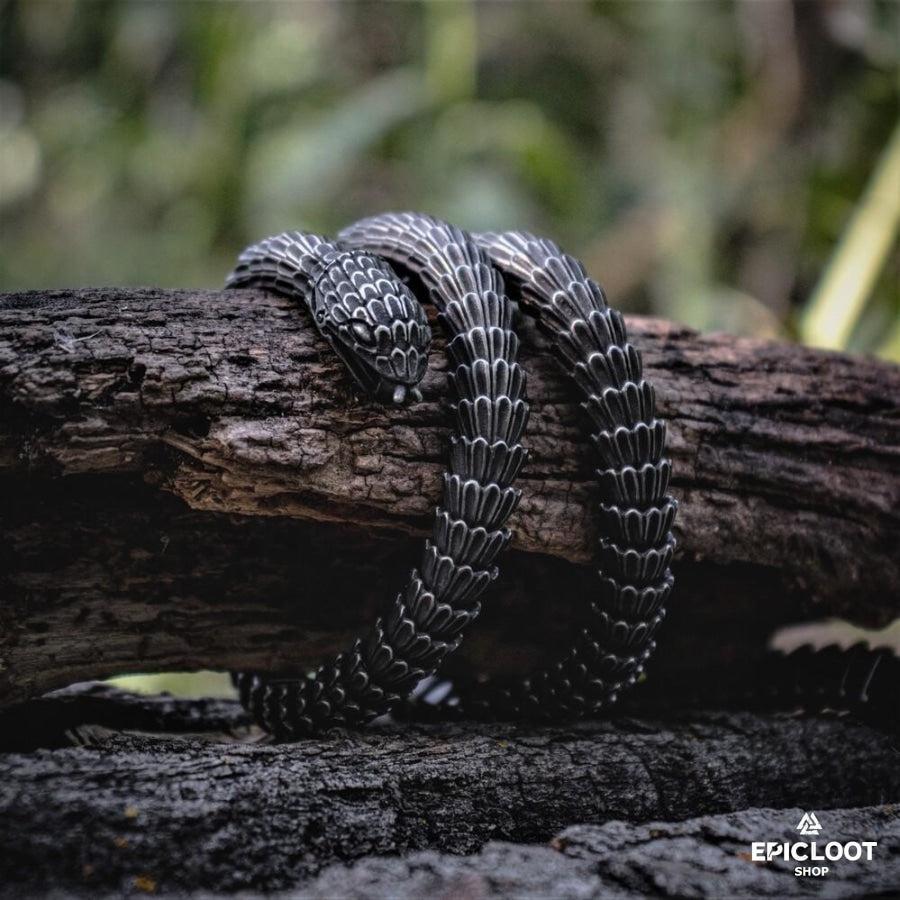
World Serpent Jormungandr Snake Necklace
The definitive Jormungandr piece, a serpent coiled in detail, capturing the moment the World Serpent bites his own tail to hold the Earth together. This isn't a small symbol on a chain. This is the Midgard Serpent on your chest, vast, ancient, refusing to be ignored. The kind of pendant that makes other men ask where you got it.
Dragon 925 Silver Necklace with Blue Crystal Stone
A handcrafted sterling silver dragon coiled around a brilliant round blue crystal, the deep blue of the seas where Jormungandr made his home. Pure 925 silver, made in Europe. The kind of piece that does not look bought, looks earned.
Nidhogg, The Dragon Beneath the World Tree
At the deepest root of Yggdrasil, the World Tree that holds the cosmos together, lives a dragon who never stops eating. Nidhogg, whose name means "The Striker" or "The Malice One," gnaws at the tree's roots day and night, century after century, refusing to let creation rest.
Most read this story and call Nidhogg evil. The Vikings did not. They understood something deeper: that destruction is the price of renewal. Without Nidhogg's hunger, Yggdrasil would grow stagnant. Old branches must fall. Old roots must die. Nidhogg is the force that clears space for what comes next.
In the Eddas, Nidhogg also feasts on the corpses of the dishonorable dead, those who broke oaths, killed kin, or lived with cowardice. He is the consequence of a small life lived too long. But for the warrior, the truth-teller, the man who fought hard, Nidhogg has nothing to take. He is the dragon you can stand before, only if you've earned the right.
"There is a serpent below, who tears at the dead, and shakes the foundations of the world. Without him, nothing new could grow." - Inspired by the Völuspá (Poetic Edda)
You wear Nidhogg when you've reached the chapter where you have to destroy something to grow. An old job. An old relationship. An old version of yourself. The man who wears Nidhogg has stopped pretending that growth is gentle. He knows that real transformation requires teeth, and he's stopped apologizing for using his.
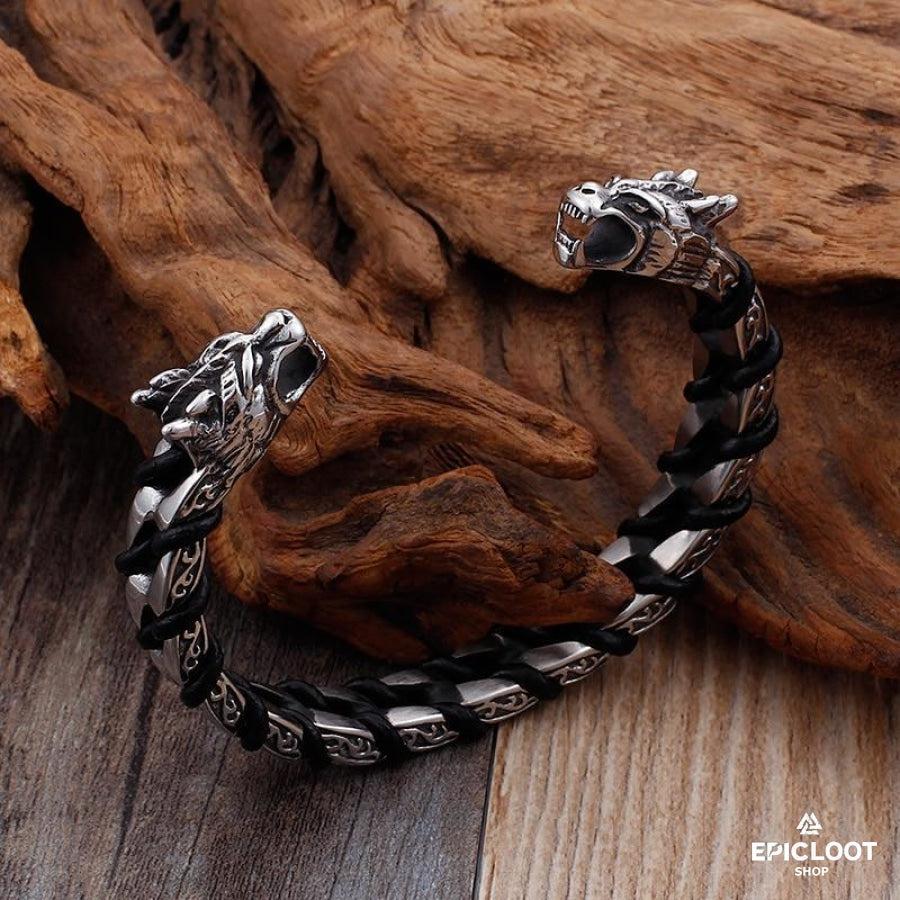
Nidhogg Dragon Bangle
A substantial open-cuff bangle featuring Nidhogg coiled around the roots of Yggdrasil. The detail captures the dragon mid-bite, ready to clear what no longer serves. Customers describe it as "surprisingly comfortable" with a "nice and heavy feel". Stainless steel that won't tarnish, rust, or fade.
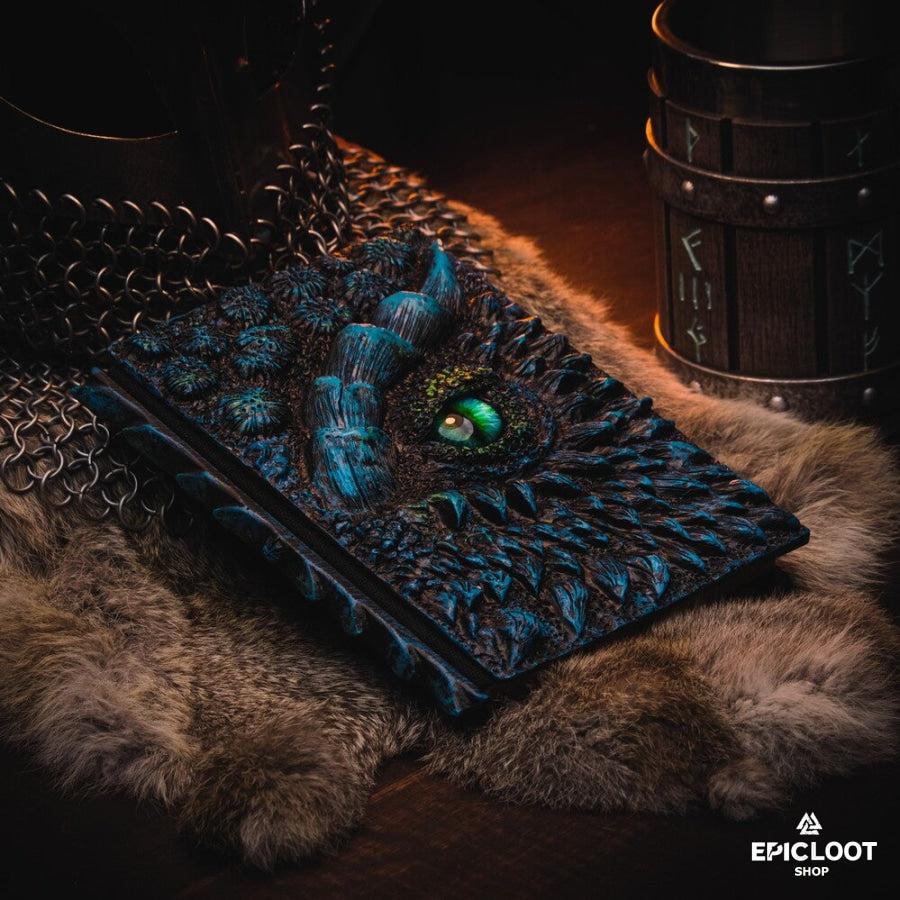
Níðhöggr Shadow Journal Book, Hand Painted
Inspired by the dark intelligence of Níðhöggr himself, the serpent-dragon who dwells beneath Yggdrasil. This hand-painted journal feels like a relic drawn from ancient northern legend, sculpted scales, a piercing green eye that watches from the cover, and deeply textured 3D detailing that gives it a living presence. For the man who is tearing down the old version of himself, one page at a time. Every entry is a root the old you has lost. Every entry is the new you taking shape.
Fafnir, The Warning of Greed
The most chilling Norse dragon was not born a dragon. Fafnir was once a man, the son of the dwarf-king Hreidmar. When his family came into a great hoard of gold, cursed by the gods of the Aesir, Fafnir's hunger for it consumed him. He killed his own father in his sleep. He took the gold for himself. He fled to a cave on the wild moors.
And then, slowly, the gold transformed him. His skin hardened into scales. His teeth grew into fangs. His body lengthened, twisted, coiled. The man became the dragon, because what he loved most was no longer human. He spent the rest of his life curled around his hoard, breathing fire on anyone who came near, until the hero Sigurd finally killed him by hiding in a pit and stabbing him from below as he passed overhead.
But here is what most people miss in the story: before he died, Fafnir warned Sigurd. He told him that the gold was cursed. That whoever took it would suffer. Sigurd took it anyway. The cycle continued.
You wear Fafnir when you've decided to protect what you've built without becoming the thing you guard. You're proud of your work, your wealth, your achievements, and you're willing to defend them. But unlike Fafnir, you remember you were once a man. You don't let the hoard become the only thing you love. Fafnir is for the man who has, and refuses to be had by what he has.
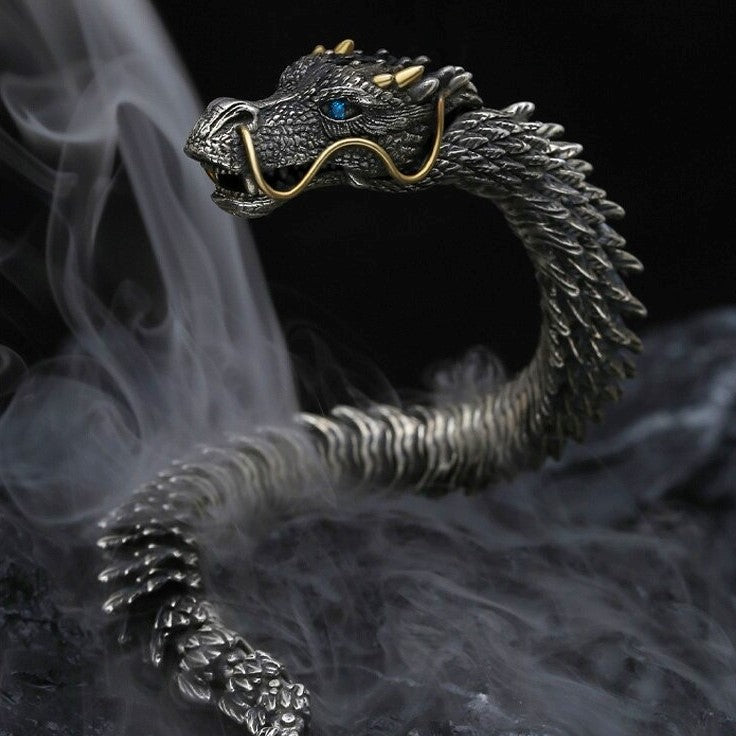
Fafnir, The Warning of Greed Bracelet
Inspired by Fafnir, the legendary dragon whose greed became his curse. A fierce dragon-head clasp, layered scales, and a commanding presence. The symbolism runs deeper than the design: a reminder to pursue strength with discipline, ambition with wisdom, and power without losing yourself to it. Bold, weighty, unmistakably striking, this is the piece for the man who respects the lesson behind the legend.
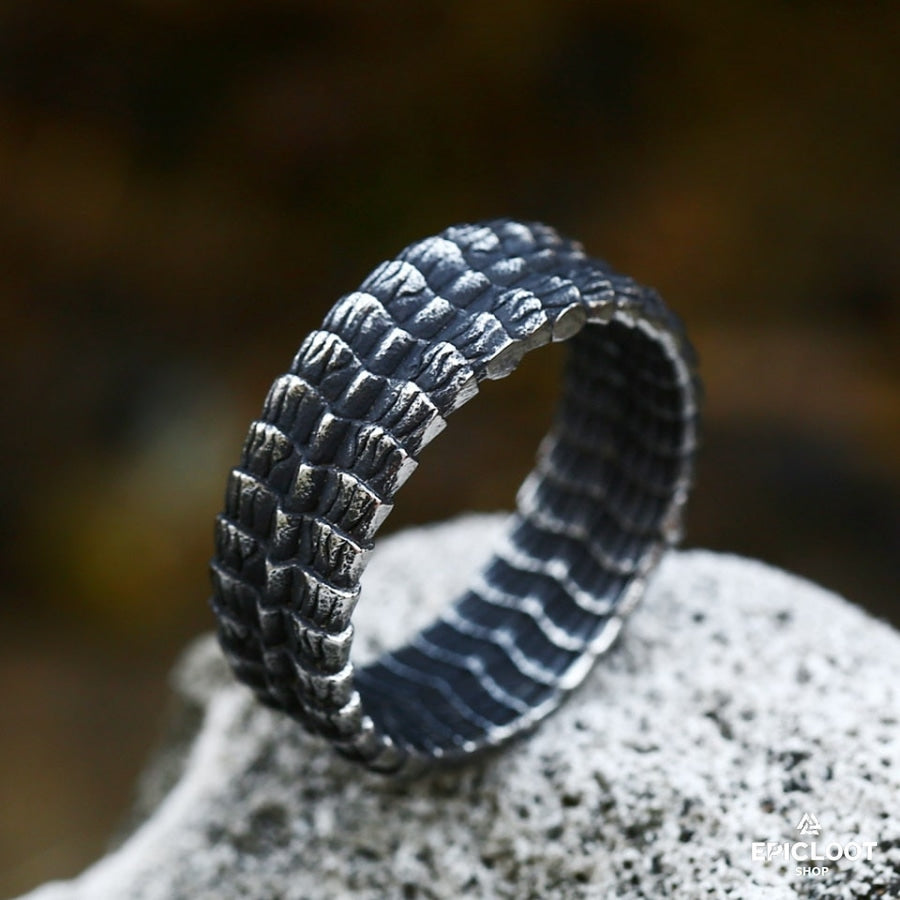
Dragon Scale Ring
A ring carved with the overlapping scales of a Norse dragon, the kind that, in the legend, were said to be impenetrable to any sword forged by men. A daily reminder that your skin can be armor too, if you've earned the right to wear it. Premium build, comfortable for daily wear, the kind of ring that becomes part of your hand.
Gríðr, The Dragon Who Guards the Bridge
Between Asgard and Midgard stretches Bifrost, the Rainbow Bridge that connects the realm of gods to the realm of men. It is one of the most strategically critical points in all of Norse cosmology. And it is guarded.
Gríðr, in some Norse traditions, is depicted as a vast three-headed serpent-dragon who patrols Bifrost, ensuring that no one crosses without right. Three heads, six eyes, jaws that never close. Where one head sleeps, two stay awake. She does not tire. She does not blink. She does not let one thing past her notice.
Gríðr is the symbol of impenetrable vigilance, the man (or woman) who guards what matters with a focus that does not waver, no matter the hour, no matter the cost. The Vikings carved her into the doorways of their longhouses, the prows of their ships, the hilts of their swords. You did not get past Gríðr. You earned the right to be let through.
You wear Gríðr when you have something to guard, and you take that responsibility seriously. Your family. Your work. Your principles. The man who wears Gríðr is the one whose "no" cannot be moved by charm, pressure, or guilt. He's the wall you don't get past unless he decides you're worthy. The bridge keeper. The one others count on to stay awake when everyone else is sleeping.
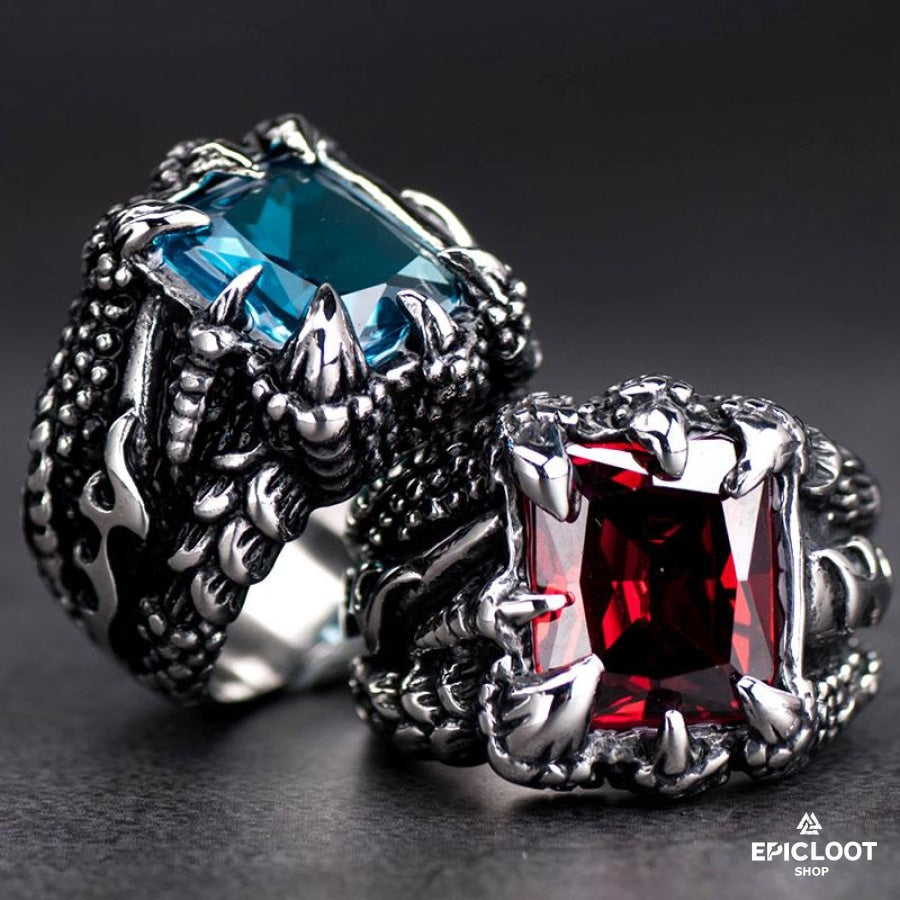
Zircon Dragon Claw Ring
A dragon's claw frozen mid-grip, holding a brilliant zircon stone the way Gríðr holds the bridge: with absolute focus, with no intention of letting go. The detail captures the moment of guarding itself, the talons curled, the grip unwavering. A piece for the man who has decided what is his, and what stays his. Premium build, daily-wear comfortable, statement-grade presence.
The Lindworm, The Dragon of the North
Across Scandinavia, woven through Viking sagas and Norse folklore, lives a different kind of dragon: the Lindworm. Smaller than Jormungandr, more cunning than Fafnir, the Lindworm was the dragon you actually met. The one carved on your grandfather's belt buckle. The one twisted around the prow of every Viking ship that sailed into the North Sea.
Lindworms had two front legs, no rear legs, and a long serpent's body that ended in a coiled tail. They were the dragons of everyday Norse life, the symbol carved into runestones, doorways, weapons, and jewelry. They were not myths to most Vikings. They were as real as wolves.
And here is what makes the Lindworm matter: it was the dragon Vikings chose to be associated with. Not the world-ending Jormungandr. Not the cursed Fafnir. The Lindworm. The dragon that was big enough to be feared, small enough to be lived with, real enough to be carved into the wood of your house. The Viking's chosen dragon was the dragon of daily ferocity.
You wear the Lindworm when you've understood that real strength is not about being the world serpent. It's about being the kind of man whose name carries weight in every room he actually walks into. The Lindworm is for the man who is dangerous in his own neighborhood, his own workplace, his own life, in ways that matter, every day, not in some mythical battle that may never come.
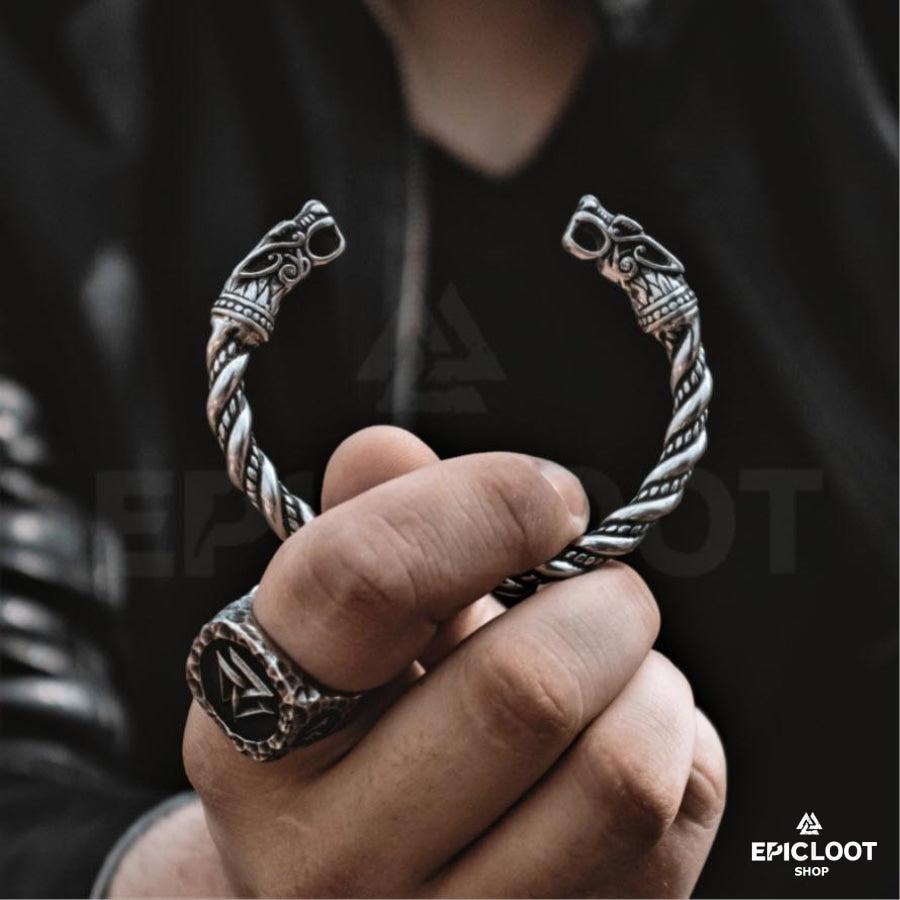
Dragon Viking Bracelet
The most historically accurate dragon bracelet in the collection. The body is decorated with a twisting spiral motif, while the ends are surmounted by stylized dragon heads, similar to those found on real Viking brooches, rune stones, and wooden artifacts from the Viking Age. This is the dragon a real Viking would have worn, no embellishment, no Hollywood, just earned ferocity.
The Dragon Heart, What the Beast Was Really Guarding
Every dragon in Norse mythology is guarding something. Fafnir guarded gold. Jormungandr guarded the world. Nidhogg guarded the cycle of decay. But ask the old skalds (Norse poets), and they will tell you that the real treasure was never the gold. The dragons were guarding something deeper. The dragon heart itself.
In multiple Norse legends, the hero who slays a dragon eats its heart, and gains understanding of all things. Sigurd ate Fafnir's heart and could suddenly hear the speech of birds. The Vikings believed that inside every dragon, beneath the gold and the scales and the fire, beat a heart of pure wisdom, the price of which was the dragon's life.
The deepest meaning is this: the dragons were not greedy. They were guardians. Guarding the fact that real wisdom, real worth, real treasure, is always protected by something terrible. To get to it, you have to face the dragon. Or, become one yourself, and decide what you're going to guard.
You wear the Dragon Heart when you've started to understand that everything worth having is guarded. Your peace. Your discipline. Your relationships. Your time. Nothing valuable lives in the open. The man who wears the Dragon Heart has decided to be both the treasure and the dragon that guards it. Whole. Defended. Worth the journey to reach.

925 Silver Dragon Guards a Blue Crystal Heart
The masterpiece of the collection. Pure 925 sterling silver, handcrafted, featuring a dragon coiled protectively around a brilliant blue crystal heart, the heart the dragon was guarding all along. A piece for the man who knows that what he protects defines him more than what he owns.
Frequently Asked Questions About Norse Dragons
Did the Norse believe in dragons?
Yes. Dragons were a central part of Norse mythology and folklore. The Vikings called them dreki (dragon) and ormr (serpent), and dragons appeared in their religious beliefs, sagas, art, ship designs, and everyday jewelry. They believed dragons were forces of nature, immensely powerful, ancient, and indifferent to human rules, rather than simply "evil monsters."
Who is the most powerful dragon in Norse mythology?
Jormungandr, the World Serpent, is the most powerful dragon in Norse mythology. Born of Loki and the giantess Angrboða, Jormungandr grew so vast that he wrapped around the entire Earth, biting his own tail. He was Thor's destined enemy and one of the great forces unleashed during Ragnarök, the end of the world.
What dragon lives under Yggdrasil?
Nidhogg, "The Striker," is the dragon who lives at the deepest root of Yggdrasil, the World Tree. He gnaws at the roots day and night, century after century. He also feasts on the corpses of those who broke oaths or lived dishonorably. Far from being purely evil, Nidhogg represents the necessary force of destruction that clears space for renewal.
Was Fafnir originally human?
Yes. In the Volsunga Saga, Fafnir was originally a man, the son of the dwarf-king Hreidmar. After his family received a cursed gold hoard, Fafnir's greed consumed him. He killed his father, took the gold, and slowly transformed into a dragon as the curse and his obsession overtook him. He was eventually slain by the hero Sigurd. Fafnir is the Norse warning about what greed does to a man.
Why did Vikings put dragon heads on their ships?
Viking ships, called drekar (dragon ships), bore dragon-headed prows for several reasons: to intimidate enemies, to invoke the protection of dragon spirits, and to honor the cultural belief that the dragon was the symbol of unstoppable power. Some sources also suggest dragon prows were thought to ward off evil sea spirits and grant the ship safe passage through dangerous waters.
What does Norse dragon jewelry symbolize?
Norse dragon jewelry symbolizes raw power, fearlessness, the refusal to be tamed, protection of what one has built, and a connection to the deep ferocity of Viking heritage. Different dragons carry different meanings: Jormungandr for vastness and presence, Nidhogg for transformation through destruction, Fafnir for guardianship, the Lindworm for everyday Viking ferocity.
Can anyone wear a Norse dragon symbol?
Yes. Norse dragon symbols are universal symbols of strength, protection, and refusal to be ordinary that are not tied to any specific religion. They are worn by people from all backgrounds who connect with the values they represent: fearless presence, defending what matters, and refusing to shrink to fit smaller spaces.
Does Odin have a dragon?
Odin does not have a dragon as a direct companion. His personal animals are his two ravens (Huginn and Muninn), his two wolves (Geri and Freki), and his eight-legged horse (Sleipnir). However, Odin is intimately connected to dragons through Yggdrasil (where Nidhogg lives), through the Ragnarök prophecies (where Jormungandr appears), and through his role as the wisest god, who understands the dragon as a force of nature rather than an enemy.
The Dragon Has Been Waiting
Six dragons. Six different kinds of refusal. Somewhere above is the one that called to you, the one you came back to, the one you couldn't stop reading about. That's your dragon. The one who refuses to apologize for the space he takes. Don't overthink it. Claim it.
Explore the Full Dragon Collection
Leave a comment